Adapt the Rules Kindly
A game is only a structure for interaction. When the structure causes friction, frustration, or exclusion, the host has the authority—and the responsibility—to change it. Adapting rules is not about making things 'easier'; it is about making things appropriate for the people in the room. Here, we outline the fundamental ways you can adjust almost any activity to serve your guests better.
Removing the Clock
Time pressure is the most common cause of stress in casual games. Timers force players to prioritize speed over accuracy or enjoyment. By simply ignoring the timer in a boxed game, or refusing to add one to a home-made activity, you instantly lower the emotional temperature of the room.
When to use this: If you notice players rushing, knocking over pieces, or becoming terse with one another. Let the turn dictate the pace, not a ticking clock.

From Competitive to Cooperative
Many traditional formats, such as Go Fish or classic memory matching, inherently pit players against one another. You can flip this dynamic by establishing a shared goal. Instead of "who can find the most pairs," frame the objective as "how quickly can we, as a group, clear the board."
When to use this: Ideal for mixed-age groups where older children might otherwise dominate younger siblings, or when dealing with highly competitive personalities.

Adjusting Physical Boundaries
Spatial requirements can be a barrier for those with mobility issues or sensory sensitivities. If a game requires moving across a large, noisy room (like a scavenger hunt or a relay), compress the physical footprint. Move the target closer, lower the height requirements, or bring the game entirely to the tabletop.
When to use this: If guests are seated and hesitant to stand up, or if the room is simply too crowded with furniture and Christmas decorations (like the tree and piles of gifts) to navigate safely.
The Thinking Behind the Play
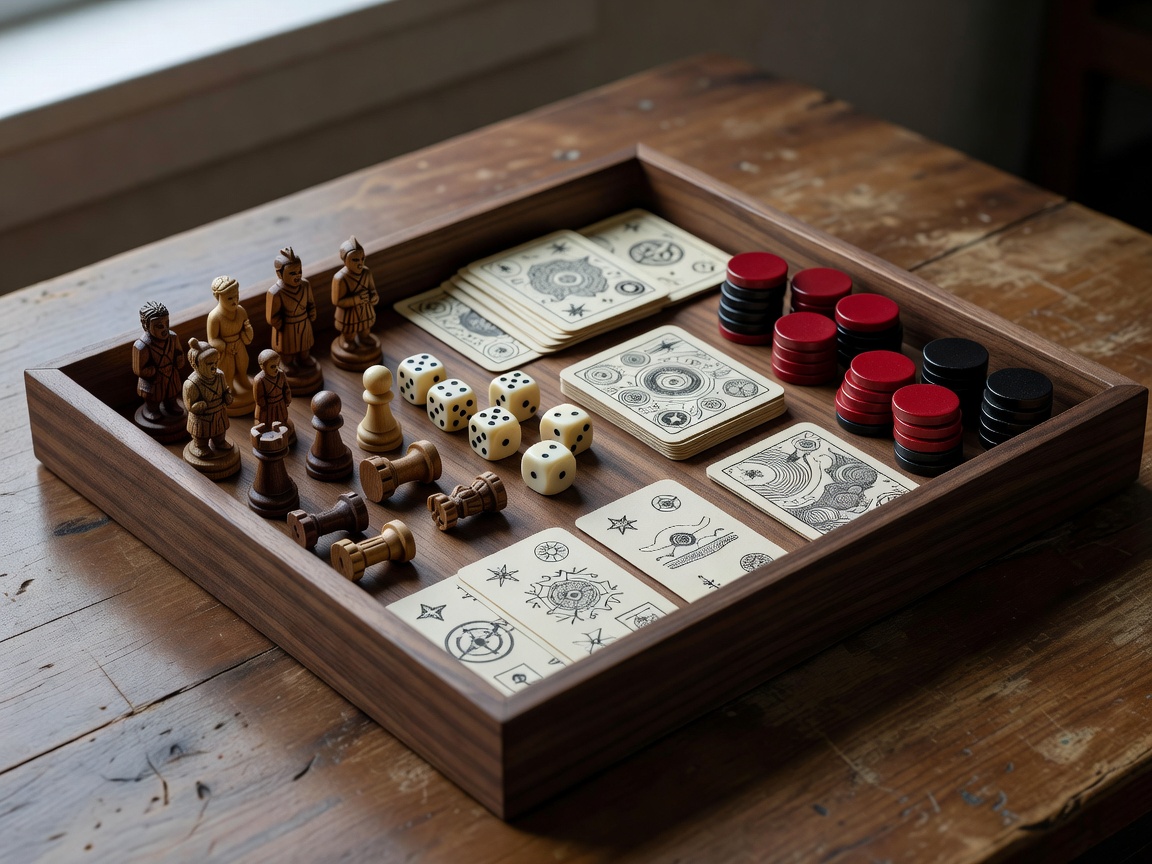
Adapting games requires observation. As the host, watch how people interact with the materials. Are they squinting to see the cards? Use larger, higher-contrast materials. Are their hands struggling with small tokens? Swap them for larger wooden blocks or thick folded cardboard.
Communicate these changes clearly before the activity begins, presenting them simply as "the rules for this house." This prevents anyone from feeling singled out or patronized, establishing a unified, welcoming standard for play.